
Key Takeaways The United States is the top car importing country with $183.83Bn in 2025, despite a recent pullback from its 2024 peak. Top 5 of top car importing countries are the US, Germany, the UK, France, and Belgium. Since 2023, China has fallen almost halfway down the list of car-importing countries as its own EV manufacturing has boomed. Spain and the UK are the strongest annual growth markets among car-importing nations, while Brazil leads quarterly growth by a wide margin. The best and most actionable picture of global automotive demand comes from tracking annual and quarterly data from the top car-importing countries. What Are the Top Car Importing Countries? The top car importing countries are the countries that import
China’s technology export mix is shifting fast in 2026. China’s Semiconductor exports boosted by AI memory chip boom. According to China’s export trade data, Solar panel exports slowed after years of oversupply. Lithium-ion battery shipments rise before the new domestic consumption tax. Below, we dive into what China’s trade data reveals for three of its most watched tech export categories — batteries, solar cells, and semiconductors — using country-by-country and HS-code-level figures for Q1 and Q2 2026. Quick answer: China’s semiconductor exports (HS 8542) grew the fastest of the three categories, up 44.6% in value from Q1 to Q2 2026, driven by a 67.3% jump in memory chip exports. China’s exports of lithium-ion batteries (HS 85076000) rose more moderately at
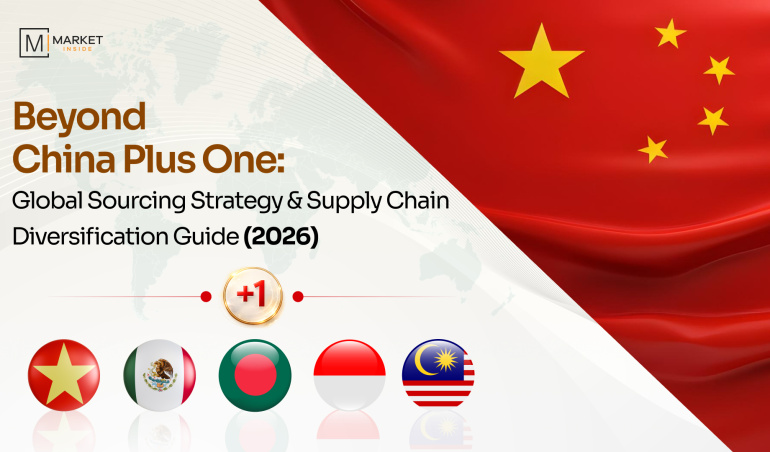
For years, headlines have suggested that the world is moving away from China. Factories are relocating. Companies are diversifying. Governments are encouraging domestic manufacturing. Countries like Vietnam, Mexico, Malaysia, and Indonesia are increasingly becoming part of global supply chains. But here’s the reality that many businesses misunderstand. The future of global manufacturing isn’t China versus the rest of the world. It’s China plus the rest of the world. This is the essence of the China Plus One Strategy—a global sourcing strategy where companies continue to leverage China’s manufacturing strengths while establishing production or supplier relationships in one or more additional countries. Rather than replacing China, businesses are reducing dependency on a single manufacturing hub to improve resilience against geopolitical uncertainty,
Global Grapes Market Summary Grapes—the classic and best snack to nibble, blend into juice, and savor as wine. They are one of the most traded fruits. With its harvest seasons in the Northern and Southern Hemispheres, fresh grapes are available for the whole year. The global grape export is valued at US$13.69 billion in 2025. But have you ever wondered where grapes originate from? What is the grape export market? Which countries are the top global grape importers? Which countries make billions of dollars in grape shipments each year? In this piece of information, we will discover global grape exporters and importers, production trends, demand and supply dynamics. It also explores emerging market opportunities, supply chain challenges, and the factors
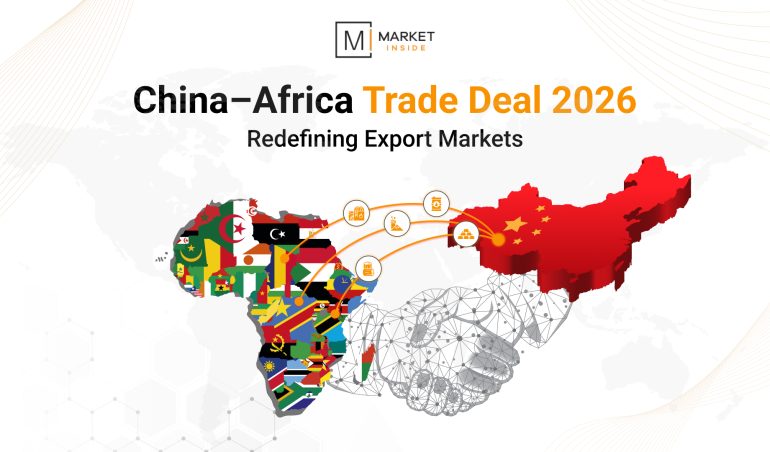
China has announced a major trade shift, implementing zero tariffs on imports from 53 African countries, a move set to reshape global trade dynamics in 2026. This decision signals deeper China–Africa economic integration, improved market access for African exporters, and a potential realignment of global supply chains. From minerals and oil to agriculture and manufactured goods, the policy could unlock new export opportunities while strengthening Beijing’s influence across the continent. But which African countries will gain the most? How will this impact global competitors like the US and EU? And what does it mean for exporters, investors, and trade intelligence professionals? In this Market Inside blog, we break down the key drivers behind China’s zero-tariff strategy, identify the biggest beneficiaries,
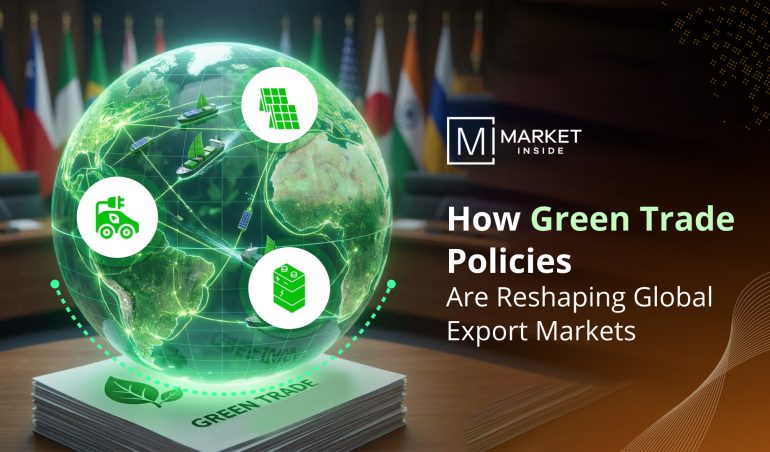
In recent years, green trade policies and regulations that incorporate environmental criteria into international trade have emerged as a major force shaping global exports. By prioritizing low-carbon production, carbon pricing, and environmental compliance, countries and blocs are shifting the rules of competition. Policies such as the European Union’s Carbon Border Adjustment Mechanism (CBAM) and evolving climate standards are redefining cost structures, supply chains, and export competitiveness. These policies intend to reduce global emissions, but they also carry significant trade and economic implications. Market Inside helps you understand connection between green trade policies and global imports and exports. What Are Green Trade Policies? Green trade policies integrate environmental concerns into trade rules and practices. They include: Carbon Border Adjustments (tariffs on
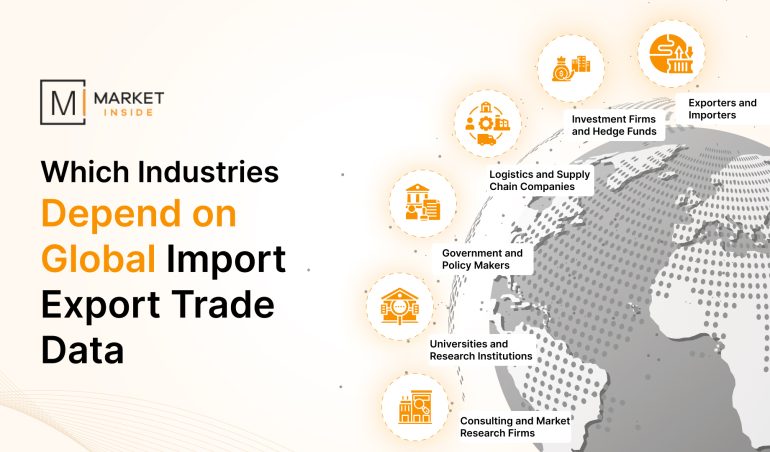
In an era defined by supply-chain disruptions, shifting trade policies, and intensifying global competition, industries can no longer rely on instinct alone. Global import export trade data has emerged as a critical intelligence layer, helping businesses understand where goods move, who controls supply, how prices fluctuate, and which markets are gaining momentum. What was once used mainly by traders is now a strategic asset for manufacturers, logistics firms, banks, investors, and policymakers alike. By analyzing shipment data, tariff trends, and buyer–supplier relationships, industries gain early signals of demand shifts, competitive threats, and growth opportunities. Those that leverage trade data make faster, more confident decisions—while those that don’t risk falling behind in an increasingly data-driven trade landscape. Market Inside explains which
Key Highlights Global trade is shifting from multilateral globalization to regional and geopolitical trade blocs, driven by supply-chain security, geopolitics, and strategic alliances. Trade fragmentation is reshaping imports and exports, with friend-shoring, near-shoring, and regional FTAs gaining priority over cost-driven global sourcing. Businesses and governments must adapt to a multi-nodal trade system, balancing efficiency, compliance, and resilience in a more complex global trade landscape. Global trade is entering a decisive new phase. The era of seamless globalization is defined by open markets, extended supply chains, and multilateral trade rules. It is gradually giving way to a more fragmented world of regional trade blocs, strategic alliances, and geopolitically aligned supply chains. Rising tariffs, trade wars, sanctions, and resilience-first policies are no
China’s electric vehicle (EV) industry, once fueled by massive state subsidies, is entering a new era. As Beijing unveils its latest Five-Year Plan (2026–2030), one of the most notable shifts is the phase-out of EV subsidies that have powered domestic demand for over a decade. Instead, policymakers are pivoting toward a model that emphasizes export growth, innovation, and global competitiveness. From Subsidy-Fueled Growth to Self-Sustaining Industry Over the past ten years, generous government support—through direct subsidies, tax incentives, and infrastructure investment—turned China into the world’s largest EV market. By 2024, China accounted for more than 60% of global EV sales. But as the EV market matures, the government believes the time has come to wean the sector off state aid.