
The global supply chain is one of the most crucial factors in the modern era for connecting business to business, countries to countries, and people to people through a network to supply resources. The concept and need of the supply chain date back to ancient times, when human society began trading goods, connecting distant regions with systems of transportation and exchange. In modern times, the export and import goods dependency increased drastically to meet demand and supply needs. The US, emerged as the largest supplier of goods to the world, dominating the global supply network with robust manufacturing capacities, state-of-the-art infrastructure, efficient logistics, and strategic positioning. However, China has overtaken the US to become the world’s leading supplier of goods,
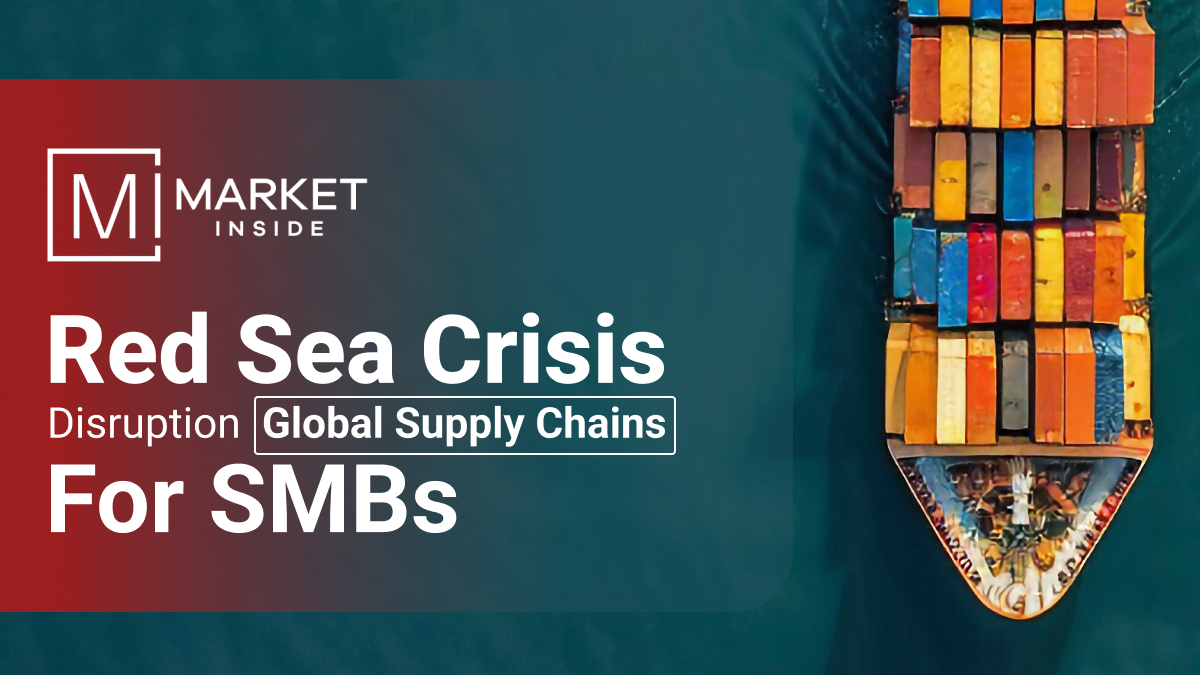
Global supply chains have faced significant disruptions due to congestion caused by Red Sea diversions, resulting in soaring container rates, and creating challenges for businesses worldwide. Attacks by the Houthis on ships led to the United States and allied responses, causing chaos in maritime trade. India’s small and medium-sized businesses, especially exporters, are bearing the worst hit. Let’s closely analyze the export traffic of India’s top ports and destinations and examine the main problems for exporters. According to a report, small and medium-sized business (SMB) shippers began increasing their trade activity earlier than usual. The motivations behind this early surge included: Avoiding potential delays or high rates later in the year due to the Red Sea crisis. Bringing in commodities
Highlights Concerns rise of a “ripple effect” on global supply chains after a container ship crashed into a bridge in the US city of Baltimore. According to a report, numerous problems could arise for India’s supply chain. The supply chain of coal, LNG, and refined products could be affected but have minimal impact on US refined products markets. The traffic through the Maryland port has been disrupted after the collapse of Baltimore’s Francis Scott Key Bridge, after being struck by the container ship on 26th March 2024. This port is the major hub for warehousing and transhipment of commodities on the US East Coast. The port of Baltimore near the bridge is the largest in the United States for specialized
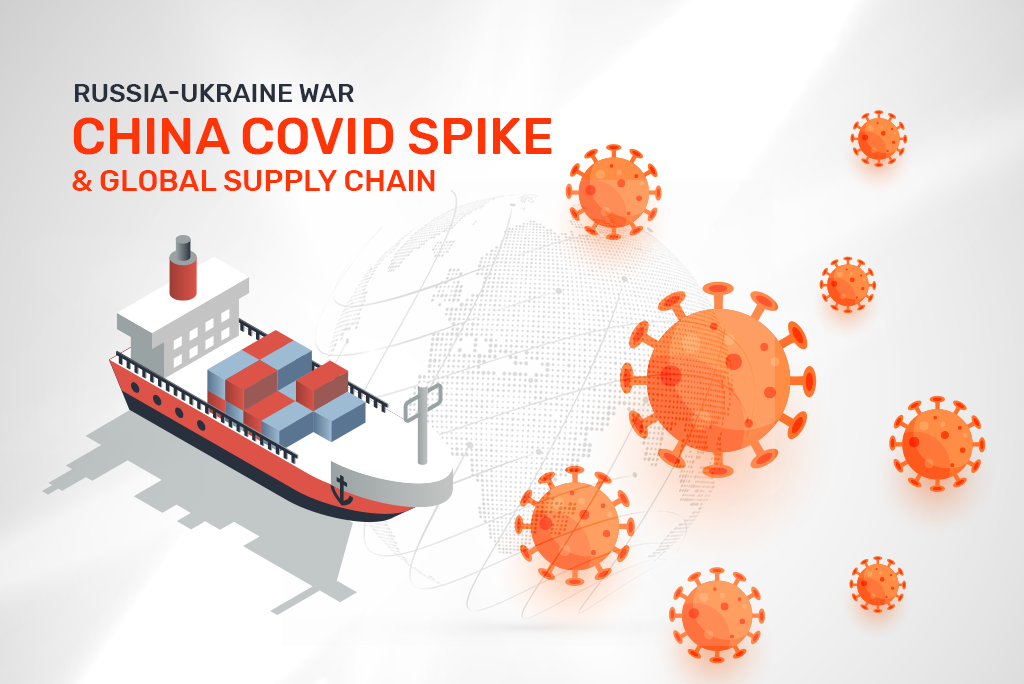
Russia’s invasion of Ukraine and sanctions imposed on it for doing so and new pandemic-related shutdowns in China are the latest events to rock global supply chains. Economies of China, India, the U.S., the UK, and other countries are still struggling to fully recover from the Covid-19 pandemic that created havoc in the last two years. Now war and the new pandemic would put huge implications on the trade flow of commodities around the world. Combined with the China-U.S. trade war and other pandemic and climate-related disruptions, countries should reduce their dependency on China for components & finished goods and on Russia for transportation & raw materials and must lead to more localized, or regional, sourcing strategies. If China decides
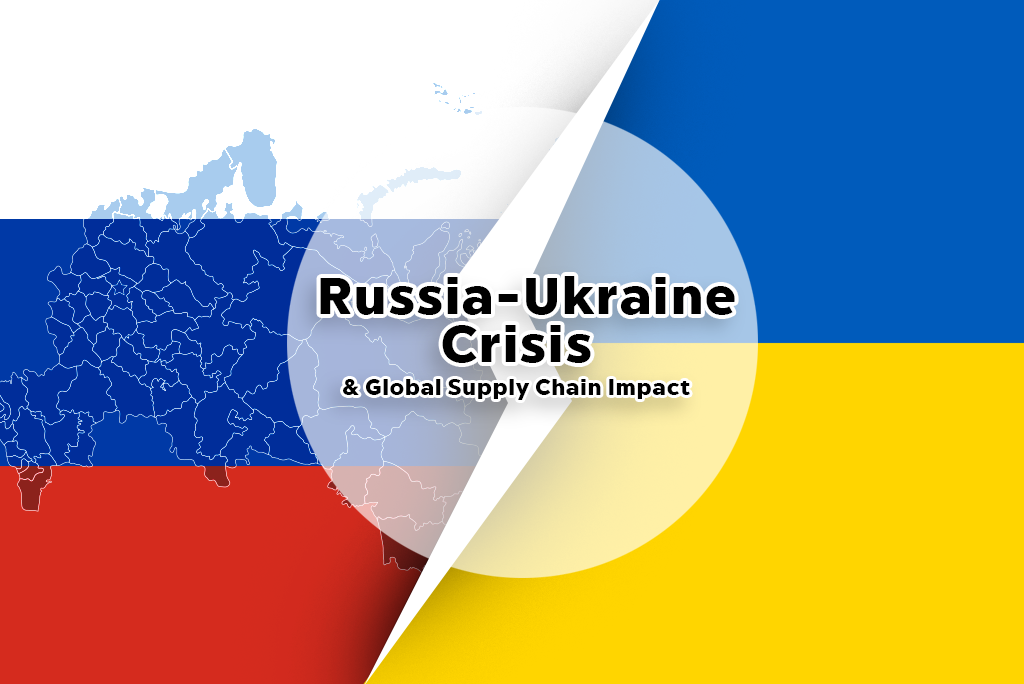
Several commodity markets are starting to experience a risk of global supply chain hindrance due to growing tension between Russia and Ukraine. There is still plenty of uncertainty over how the situation will evolve, but it is still worthwhile to look at the potential impact on international trade as prices of several commodities including crude oil, metals, semiconductors, and food supplies have already been shot up. A risk to Russian natural gas flows via Ukraine to Europe arises if Russia invades Ukraine. While, depending on the scale of any invasion, it could also potentially have an impact on the production and export of Ukrainian agricultural commodities, including corn and wheat. Let’s discuss how the Russia-Ukraine conflict may impact the global
2022 is the third year of the ongoing Covid-19 pandemic and new variants of coronavirus including Omicron, which has spread around the world and slowed down the global economy. The ongoing supply chain restrictions due to Omicron is unlikely to improve in H1 of 2022, and the situation may improve in the second half only. 2021 was marked by rapid recovery from the dramatic 2020 resulting from the initial outbreak in Q1 of 2020. Q2 of 2020 proved to be the worst quarter for global trade on record, but things started to improve relatively fast. The growth rates peaked in Q2 of 2021 and then moderated. Let’s try to analyze global trade in 2020, 2021, and what will be next
The world’s supply chain issues will continue in H1 of 2022 but can be alleviated by rapid progress in technology development. Since the Covid-19 outbreak spread across the countries, the global supply chain has been affected and may continue to be restricted even in the first half of 2022 due to a new variant of coronavirus, Omicron. The year 2020 saw the real pain of economic slowdown and recovery was started from the last quarter of 2020 and peaked in 2021. Despite the global supply chain crisis will continue to challenge the shipping and delivery industry, companies must adopt wider adoption of logistics solutions and invest in growing technologies that will help global economies rebound from the pandemic. In 2022,