
China has announced a major trade shift, implementing zero tariffs on imports from 53 African countries, a move set to reshape global trade dynamics in 2026. This decision signals deeper China–Africa economic integration, improved market access for African exporters, and a potential realignment of global supply chains. From minerals and oil to agriculture and manufactured goods, the policy could unlock new export opportunities while strengthening Beijing’s influence across the continent.
But which African countries will gain the most? How will this impact global competitors like the US and EU? And what does it mean for exporters, investors, and trade intelligence professionals?
In this Market Inside blog, we break down the key drivers behind China’s zero-tariff strategy, identify the biggest beneficiaries, and analyze the short- and long-term implications for global trade.
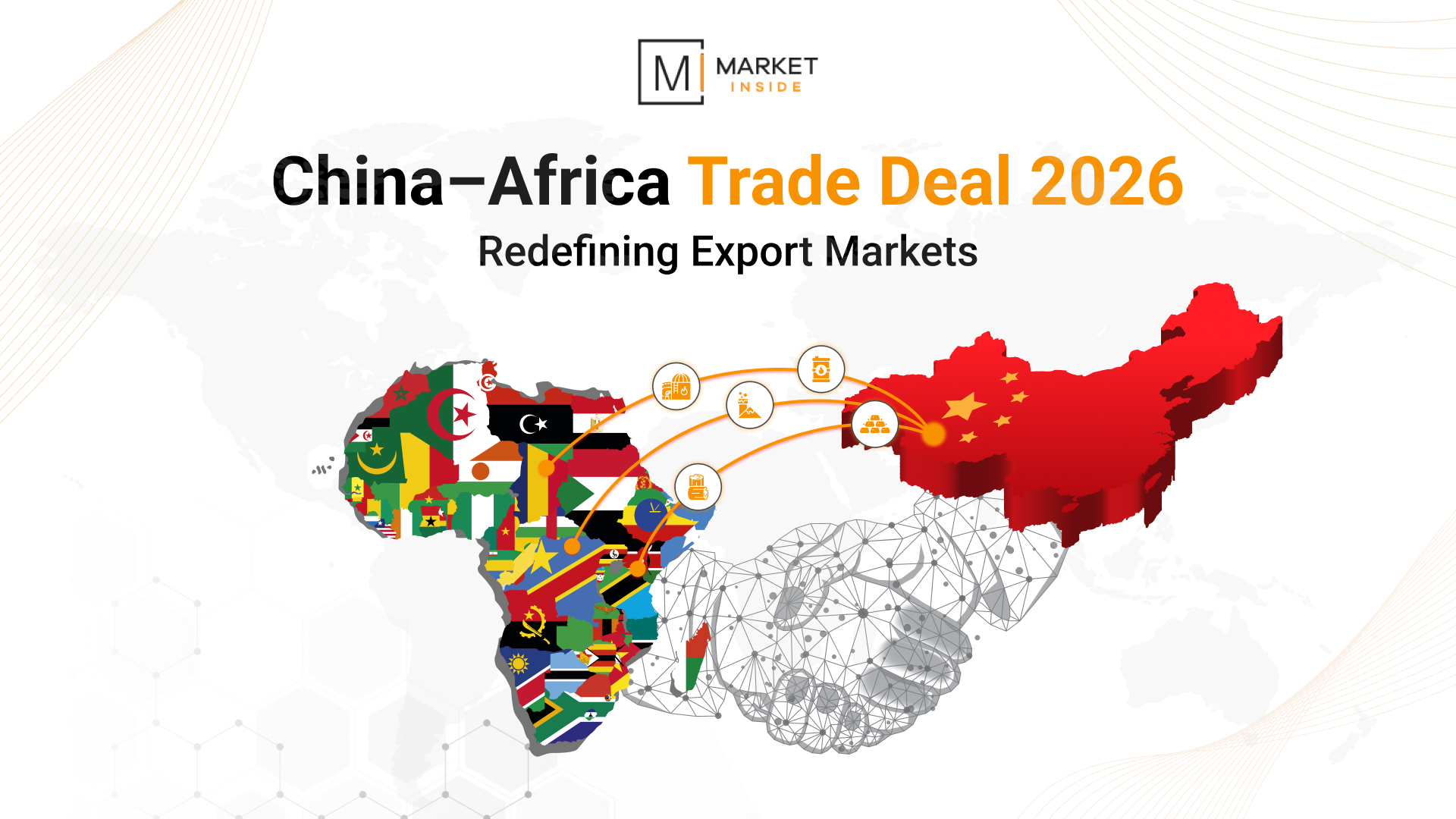
Starting May 1, 2026, China will eliminate import tariffs on goods from 53 African countries with which it has diplomatic relations, excluding only Eswatini due to its ties with Taiwan, a rare African state not aligned with Beijing. This marks a major expansion of China’s previous preferential trade regime, which had already granted some zero-tariff treatment to least developed African countries.
Top Beneficiaries — High-Volume Exporters & Strategic Suppliers
1. South Africa
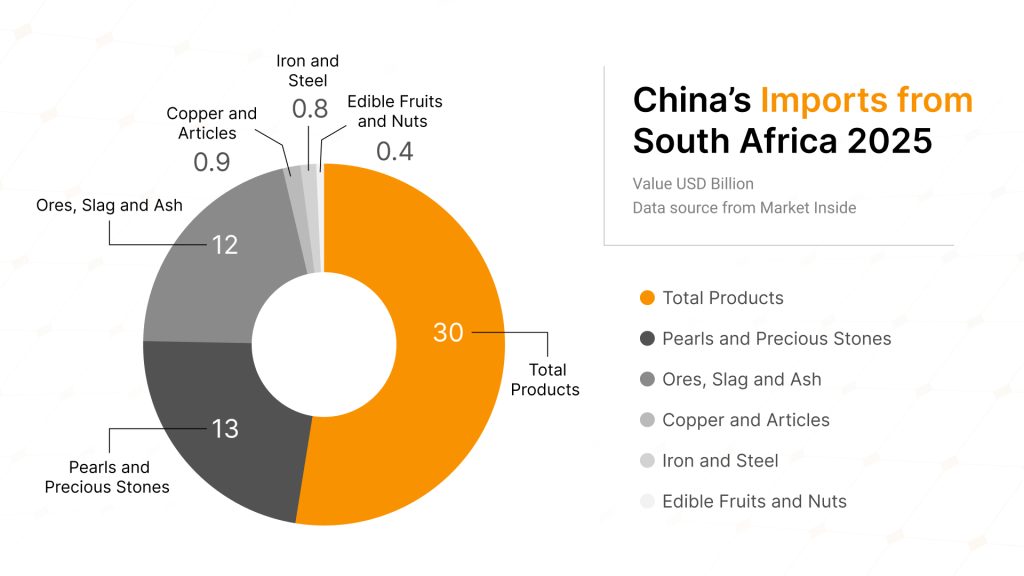
Already one of China’s largest African exporters, notably minerals, metals, and refined products. With zero tariffs, South African-manufactured goods, metals, wine, fruit, and automotive parts become more competitive. The removal of duties on previously tariffed goods could significantly boost exports. Access our dashboard and get South Africa export data with market insights.
| Product | Value USD Billion |
| Total Products | 30 |
| Pearls and Precious Stones | 13 |
| Ores, Slag and Ash | 12 |
| Copper and Articles | 0.9 |
| Iron and Steel | 0.8 |
| Edible Fruits and Nuts | 0.4 |
2. Democratic Republic of the Congo (DRC)
Major supplier of critical minerals (e.g., cobalt, copper) essential to Chinese industries. Zero tariffs reduce input costs for Chinese manufacturers and may encourage even larger shipments of high-demand raw materials. Get DR Congo export data for valuable insights.
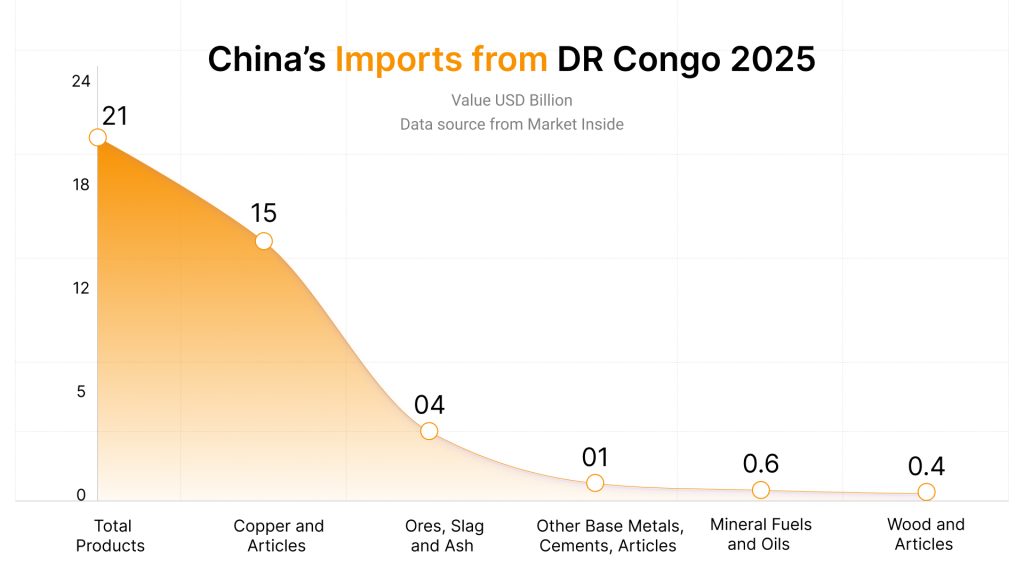
| Product | Value USD Billion |
| Total Products | 21 |
| Copper and Articles | 15 |
| Ores, Slag and Ash | 4 |
| Other Base Metals, Cements, Articles | 1 |
| Mineral Fuels and Oils | 0.6 |
| Wood and Articles | 0.4 |
3. Angola
Angola is one of Africa’s biggest oil exporters to China. With tariffs gone, Angolan crude and energy products are more price-competitive, potentially increasing volumes and foreign exchange earnings. According to Angola export data, China imports mineral fuels and oils only from Angola.
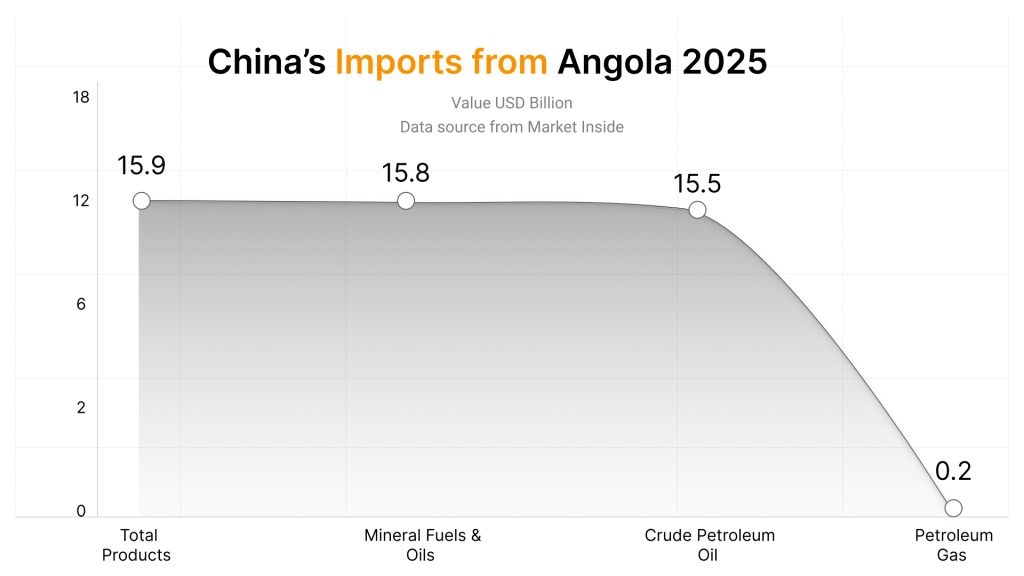
| Product | Value USD Billion |
| Total Products | 15.9 |
| Mineral Fuels & Oils | 15.8 |
| Crude Petroleum Oil | 15.5 |
| Petroleum Gas | 0.2 |
4. Guinea
Significant exporter of bauxite and other bulk minerals, inputs for aluminium production. Zero tariff treatment increases China’s incentive to source more from Guinea. According to Guinea export data, China imports aluminium ores under ores, slag & ash the most from Guinea.
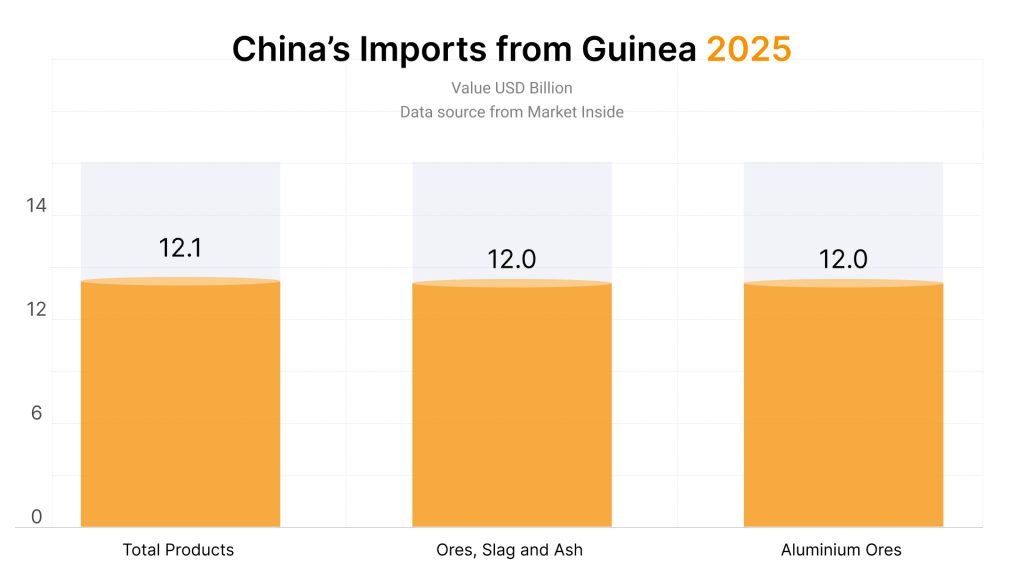
| Product | Value USD Billion |
| Total Products | 12.1 |
| Ores, Slag and Ash | 12.0 |
| Aluminium Ores | 12.0 |
Strong Secondary Beneficiaries — Growing or Diversifying Exports
The strong secondary beneficiary countries in Africa from China’s zero percent tariff are Zambia, Gabon, Nigeria, and Ghana. Market Inside visualizes crucial data that will help you in business growth.
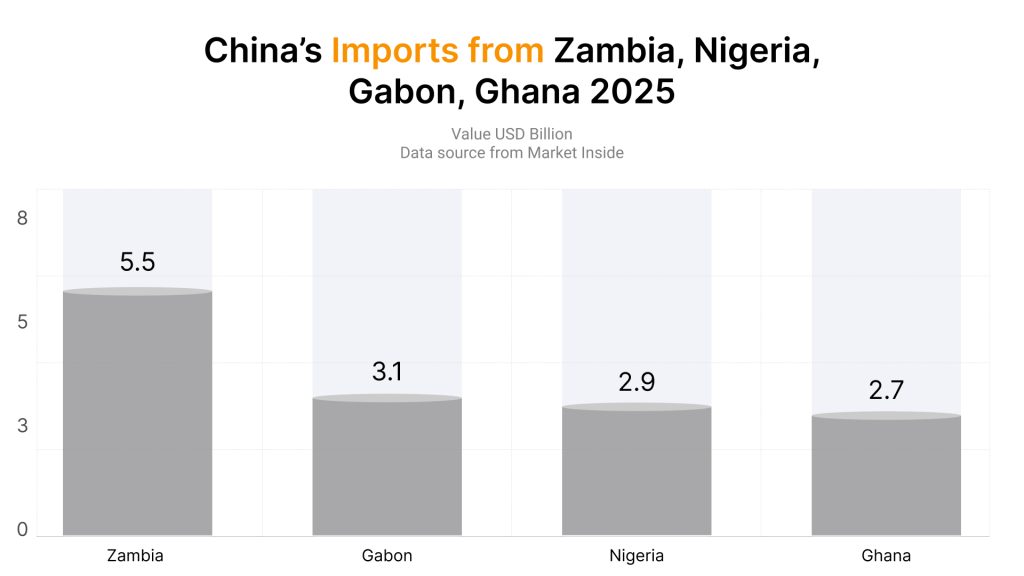
| Country | Value USD Billion |
| Zambia | 5.5 |
| Gabon | 3.1 |
| Nigeria | 2.9 |
| Ghana | 2.7 |
1. Zambia
Copper exporter with growing non-traditional exports like horticulture. Zero tariffs help diversify beyond raw minerals. Access our dashboard and get Zambia export data.
2. Nigeria
Large economy with oil, agricultural products (eggs, cashews, sesame), and solid minerals. Broader access may help reduce export costs and encourage expansion into processing. Get Nigeria export data to gain trade visibility and take smarter business decisions.
3. Gabon
Oil and manganese exporter. Zero tariffs could improve export competitiveness for commodities in Chinese markets. Access our dashboard to get Gabon export data.
4. Ghana
Cocoa, gold, and minerals are key exports. Zero tariffs — especially on processed products — may stimulate higher value-added exports too. Want to access Ghana export data? Schedule a demo today and explore essential global trade data.
Emerging Beneficiaries — Agricultural & Manufactured Goods
1. Kenya
Horticulture (avocados, flowers) already finds strong demand in China. Zero tariff access expands opportunities for fruit, vegetables, and processed foods, beyond prior arrangements.
2. Morocco
Growing export sectors (phosphates, citrus, textiles) and aims to expand into Chinese market. Zero tariffs help reduce export costs vs. other global suppliers. Get Morocco export data from our dashboard.
3. Egypt
Manufacturing base and processed goods — especially textiles and chemicals — could gain from tariff removal. Access our dashboard to get Egypt export data.
4. Namibia
Minerals, fisheries, and beef exports gain tariff-free access, a boost to export value.
Why China Is Doing This — Key Motivations
1. Strengthening Economic and Trade Ties
China has long been Africa’s largest trading partner. By removing tariffs on imports from 53 countries, Beijing makes African exports more competitive in the Chinese market, cheaper, easier to sell, and more attractive to buyers. This helps deepen economic integration between China and African economies and expands bilateral trade volumes, especially for agricultural products, minerals, and other commodities.
2. Supporting African Development (Official Narrative)
Chinese officials frame the policy as a way to help African development and broaden access to major markets. China claims this fosters shared prosperity and supports initiatives like the African Union’s Agenda 2063, an economic development framework.
Zero tariffs may help small and medium enterprises in Africa scale up exports and diversify beyond raw materials over time.
3. Geopolitical Strategy & Global Influence
China’s tariff elimination comes at a time of shifting global trade dynamics and competition with Western powers:
U.S. and Europe have offered their own preferential trade programs (like AGOA for the U.S.), but these are subject to renewal, conditions, and sometimes protectionist backlash.
China’s move signals a more consistent and generous market access policy, boosting its influence across the Global South and positioning Beijing as a reliable partner.
This ties into a broader diplomatic goal of reinforcing China’s role not just as a market for African goods but as a strategic economic partner.
4. Securing Resources and Supply Chains
Africa is rich in raw materials that feed China’s industrial sectors — oil, minerals (like cobalt and iron ore), and agricultural products. Eliminating tariffs may increase imports of these resources at lower cost, strengthening China’s supply chains and industrial competitiveness.
The Last Words
China’s decision to implement zero tariffs on imports from 53 African nations marks a defining moment in global trade in 2026. The move goes beyond tariff relief—it signals deeper economic integration, stronger South–South cooperation, and a potential shift in global supply chain dynamics. By granting duty-free access, China is positioning itself as a long-term strategic partner to Africa while strengthening its access to critical minerals, energy resources, and agricultural products.
For African economies, the opportunity is significant. Countries with strong export capacity—especially in minerals, oil, agriculture, and light manufacturing—stand to expand market share in one of the world’s largest consumer markets. However, real gains will depend on infrastructure readiness, quality standards, value addition, and the ability to overcome non-tariff barriers.
Globally, this policy could reshape export competition, influence trade negotiations with the US and EU, and accelerate economic realignment toward emerging markets. It reinforces China’s growing role in shaping trade architecture while offering African nations new leverage in global commerce.
Ultimately, the success of this zero-tariff era will depend on whether it drives sustainable export growth and industrial development—or simply deepens existing commodity trade patterns. One thing is certain: China–Africa trade in 2026 will not look the same as before.
Want Deeper Trade Insights?
Market Inside delivers real-time import–export data, shipment records, HS code intelligence, and country-wise trade analysis to help you stay ahead of global policy shifts. Book A Demo now!