
Russia withdrew itself from the UN-brokered deal, which stated that the Russian Federation allows Ukraine to export grain through the Black Sea en route. The withdrawal was likely to impact wheat and related food markets all over the world, along with wheat imports globally. While Russia, after suspending the extension of the UN-brokered Ukraine grain export deal to allow the exports of grain from Ukraine to other countries, the Federation can withdraw the decision again at any given time. Russia-Ukraine Wheat Exports The Russian invasion of Ukraine had already stirred things up in the world with the rising prices of grain such as wheat and corn, as the Russian Federation and Ukraine combined account for a 29% share of the
The world economies have been shaken by the Covid-19 pandemic since its origin in 2020. Total lockdowns in many countries impacted the global supply chain that resulted in a shortage of goods and high inflation. The year 2021 was relatively better in terms of trade recovery, however, some countries still reported new waves of covid that made them put restrictions. Now Russia’s invasion of Ukraine began in Feb this year has disrupted the movement of shipments through the Black Sea and that led to the global food crisis. Despite that which countries are the biggest economies in 2022? Let’s have a look at “World’s 10 Largest Economies”! World’s 10 Largest Economies in 2022 By Gross Domestic Product (GDP), the
EU levies to reduce emissions in order to meet the target of cutting carbon emissions. The European Union’s “Fit For 55” package consists of legislative proposals focusing on reducing carbon emissions by 2030. The new regulatory framework for reducing emissions in the EU has been proposed by its parliament. It suggests that changes are required in the Emissions Trading System (ETS) and new levies on the EU’s imports under the Carbon Border Adjustment Mechanism (CBAM). New EU Levies On Sectors The proposal under the “Fit For 55” package and the CBAM, the EU’s parliamentary authorities will initially apply the changes and impose a ‘carbon price’ on imports of high-carbon commodities imported from other countries, belonging to different industries. Read More:
The United States of America and the United Arab Emirates have signed a strategic partnership deal that will see $100 billion mobilized to develop 100 gigawatts of clean energy by 2035. The deal was signed during the Adipec energy conference in Abu Dhabi which is entitled the “Partnership for Accelerating Clean Energy” (PACE). The cooperation came within the framework of the close friendship between the UAE and the U.S. It is a commitment of both sides to work to enhance energy security and advance progress in climate action. The partnership deal between the U.S. and UAE encompasses four main pillars: Industrial and transport decarbonizationNuclear energyManaging carbon and methane emissionsDevelopment of clean energy innovation and supply chains The two countries will
EU-Indonesia to develop ties this year, so much so that the EU imports from Indonesia have surged by a value difference of about $3 billion. The EU is likely to import much higher than Indonesia’s import in the near time, as per the analysis of trade data of both countries. The imports of the EU from Indonesia are relatively higher than the imports of Indonesia. This shows that both countries, especially the European Union, are moving towards the progression of the previous talks over the Comprehensive Economic Partnership Agreement (CEPA) from 2016. EU-Indonesia Historical Trade The first data shown below shows the yearly imports of the EU from Indonesia. 2017 shows the total value of imports amounting to $19.4 billion,
Banks are facing a risk that stricter environment, social and governance criteria could worsen the trade finance gap by cutting off access to financing for companies that need it most. It could hinder their expansion of sustainable trade finance offerings to meet growing corporate demand. Trade finance comprises financial instruments that support a company’s imports and exports. “Trade Finance” – Financial instruments that companies use to facilitate trade, such as letters of credit, supply chain finance, performance guarantee, and import/export loans. Risk at Large As trade finance banks embrace ESG, some industry players worry that implementing stricter sustainability criteria into funding conditions will make it harder for companies to access trade finance. According to the reports, the trade finance gap,
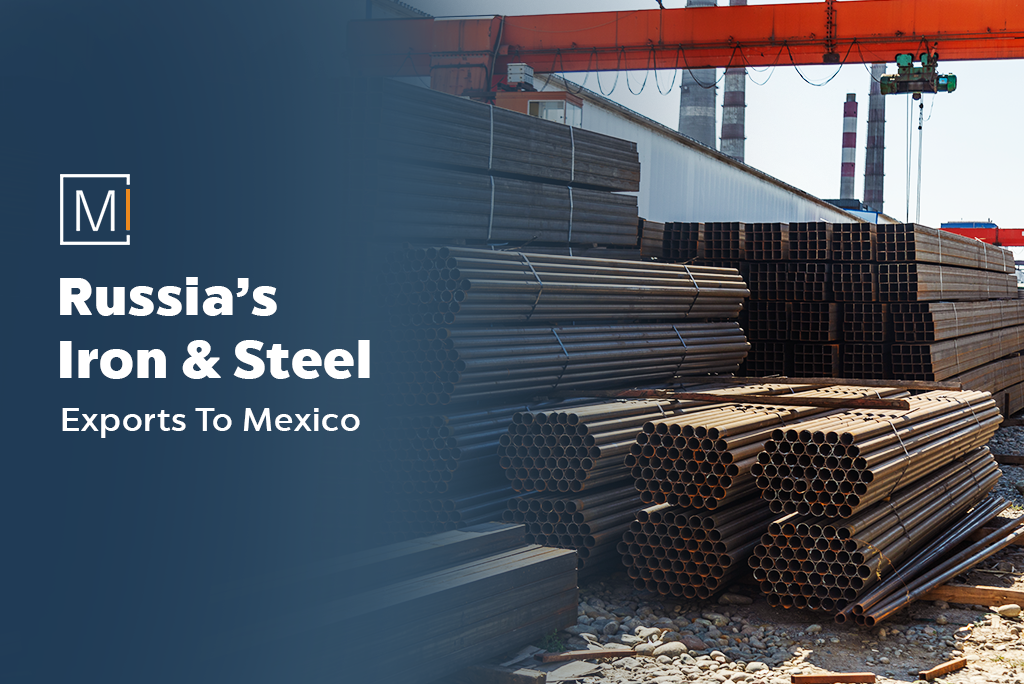
Russia produces about 4% of the world’s iron and steel, following China at the top, with nearly half of the world’s iron and steel produced by the Southeast Asian country. In 2020, Russia was the fourth-largest steel producer and hence, Russian iron & steel exports were in the top 5. In 2022, the Russian Federation increased its crude steel production as compared to the production in 2020. The production of Russia’s iron and steel (Chapter 72) and exports reached their historically highest value in 2021 and so does the values of exports to Mexico peaked high. Russia’s Iron and Steel Demand Russian iron and steel production in 2021 reached a slightly better level compared to the preceding year. In 2021,
The global nuclear medicine market grew in 2021 as total trade recorded US$810.3 million. Germany’s exports of nuclear medicine increased last year as compared to the previous year. The United States of America reported a sharp decline in the value of export shipments of nuclear medicine. According to our global nuclear medicine market research report, the top importer countries of nuclear medicine in 2021 were China, Germany, and the United States. This report involves significant information about importing and exporting countries of nuclear medicine with market trends. Global Import and Export Trends of the Nuclear Medicine Market Global trade in nuclear medicine reached up to US$810.3 million in 2021. The imports of nuclear medicine were US$480.7 million last year, up
Semiconductor exports from different countries registered a downward trend in the year 2022. The exports related to semiconductors have been found to be falling in both the quarterly and yearly comparisons. The exports related to semiconductor consists of semiconductor, diodes, transistors, electronic integrated circuits, PV cells & modules, and semiconductor device as a whole. We will trace the exports of these components from the available HS Code classifications. Semiconductor And Related Exports The top exporting countries for semiconductors and all the related components [8541] are featured below in the image. The exports registered a downfall in some countries, while the majority of countries shown below registered an increase in Q2-2022 compared to Q2-2021. Commodities Similar To Semiconductor Exports Comparison Semiconductor