
3 Years of Brexit… It’s been three years since the United Kingdom and the European Union formally implemented Brexit. Two years since the UK completely withdrew itself from the EU. With that, the UK also let go of some benefits it had while in the group. The imports and exports of the UK have gone through some fluctuations, and so does its economy. A few factors such as the pandemic of COVID-19, the rebound of trading activities and industrial work contributed to the ups and downs for the up-down hill of the UK. We will look into the UK’s trade, following the pre-pandemic, pandemic and post-pandemic periods. UK’s Trade – Pre-Pandemic The UK’s trade in the pre-pandemic years, the time
Global import-export of laptops and tablets have declined in the year 2022 so far, as per the availability of global electronics trade data 2022. The import and export of electronics, in general, accelerated after the pandemic. However, the imports and exports of tablets and laptops on a global scale showed a downward trend in the initial phase of 2022. Look at the global import-export trade data, tracing the trade values for both commodities in Subheading 847130. Top Import-Export Countries The top global importing countries for laptops and tablets (as per the HS Code mentioned above) in 2021 were—the USA (28.2%, $60.8B), Germany (8.1%, $17.5B), Japan (4.6%, $9.9B), the UK (4.5%, $9.6B), and Hong Kong (3.9%, $8.3B) with other countries featured
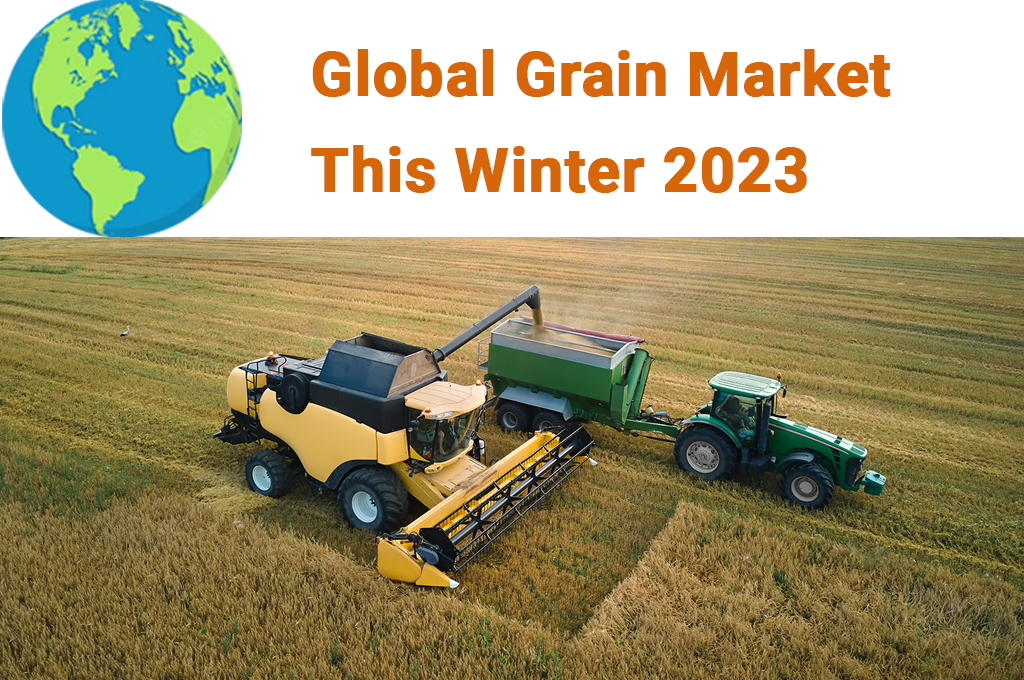
How the global grain market will be in this winter of 2023? As corn carryout is less than 1 billion bushels, and soybeans are less than 250 million bushels. So will corn prices get over $8, and soybeans over $18? These are not normal and predictable times. The economic slowdown and reduced product demand around the world are bending the historical rules. Let’s understand global export statistics of corn and soybean and 5 key market challenges to watch this winter of 2023. Brazil is the world’s biggest producer and exporter of soybeans, surpassing the United States. Brazil, the U.S., Argentina, and other major soybean-exporting countries in South America are likely to produce a total crop exceeding 8 billion in 2023.
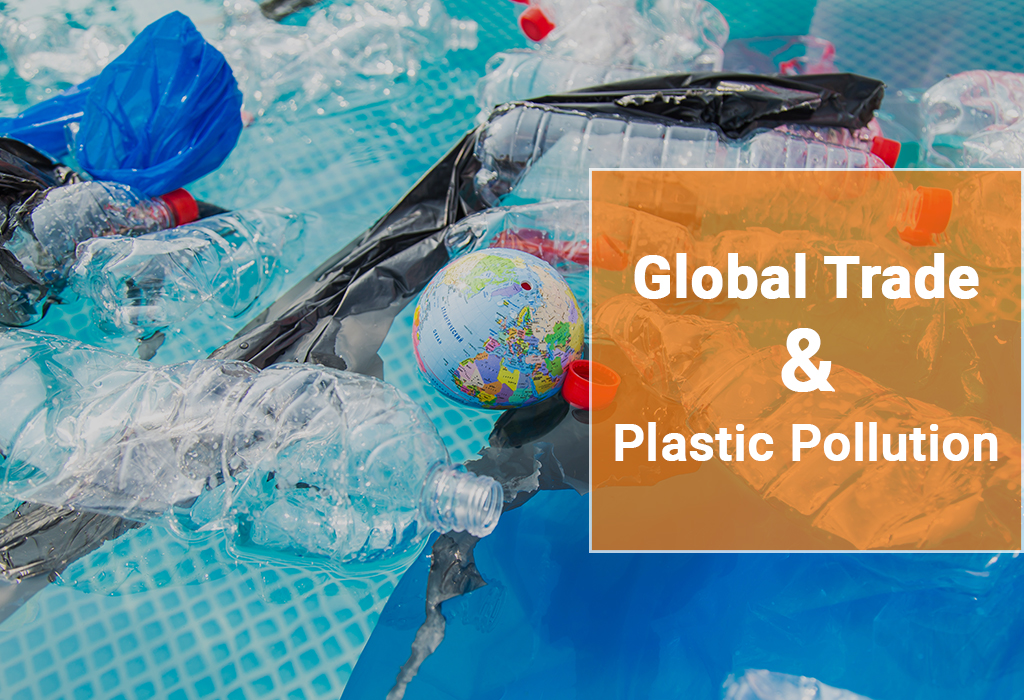
Key Highlights Plastic pollution is a real issue due to global patterns of plastic production and consumption.Global trade can help reduce plastic pollution via trading agreements that support responsible plastic flows and circularity.A summit in Uruguay discussed establishing an internationally binding treaty on plastic pollution for the first time for delivery by 2024. Government representatives around the world discussed the internationally binding treaty to end plastic pollution in Uruguay. The summit was held from 28th Nov to 2nd Dec 2022. The United Nations Environment Assembly (UNEA) has promised to deliver by 2024. It is the first time global countries will see multilateral action against plastic pollution on such a large scale as the transboundary nature of plastic becomes increasingly evident.
The EU has been progressing towards creating a transition from the traditional usage of fossil fuels to alternative and clean energy. The efforts come, especially from the aftermath of the Russia-Ukraine crisis that started in February 2022. Imports for clean and alternative energy in the EU were registered to be slightly higher than exports. A few commodities included in the representation of the comparison data between the imports and exports are—solar panels, biodiesel, and wind turbines. EU Clean Energy – Product 1: Solar Panels The first product featured in the EU clean energy imports is solar panels (Subheading 854140). From the comparison between the values of both imports and exports, we can see that the values of imports are already
North America (the United States and Canada) is endowed with significant natural gas resources that could play a vital role in addressing major challenges that the global energy industry faces today. North America could supply affordable energy to help counter high prices across the U.S. and Europe.The region could provide energy security by exporting liquefied natural gas (LNG) to Europe.Natural gas could replace high-emission forms of energy to help advance the decarbonization agenda. North American countries have the potential to provide this low-cost, and alternative energy source. Greater collaboration across the industry, regulators and consumers could unlock this potential. Stakeholders could support reliable gas supply, develop North American gas infrastructure, and commit to long-term offtake agreements. These measures could reduce
The European Union (EU) is going through a phase of soaring energy prices as a result of the Russian invasion of Ukraine. The high energy prices in the EU have influenced the authorities to devise measures to go into a self-reliant mode to meet domestic demand. The members of the European Union are proposing a ban on the importation of Russian crude products following the 5 of December. Along with the ban on importing crude oil from Russia, the price cap on the importation of gas is also being discussed among the European Commission as a political agreement. Russian Crude Exports – Region Wise Russia’s crude oil exports to top regions in the world are represented in Russian export data
Main Points: According to a report, an estimated 21% of all global trade was transited through the South China Sea in 2016.Territorially, there are seven claimants to the South China Sea – Brunei, China, Indonesia, Malaysia, the Philippines, Taiwan, and Vietnam. But to whom does the South China Sea matter most?According to market experts, other than China, the most dependent countries on the South China Sea are Japan, Indonesia, Singapore, South Korea, and Vietnam. The South China Sea is a vital trade route between Southeast Asian countries, particularly – China, Taiwan, Thailand, Vietnam, the Philippines, Brunei, Malaysia, and Singapore. Combined with an abundance of hydrocarbon reserves & marine life, this water body is critical beyond its boundaries and a primary
The world economies have been shaken by the Covid-19 pandemic since its origin in 2020. Total lockdowns in many countries impacted the global supply chain that resulted in a shortage of goods and high inflation. The year 2021 was relatively better in terms of trade recovery, however, some countries still reported new waves of covid that made them put restrictions. Now Russia’s invasion of Ukraine began in Feb this year has disrupted the movement of shipments through the Black Sea and that led to the global food crisis. Despite that which countries are the biggest economies in 2022? Let’s have a look at “World’s 10 Largest Economies”! World’s 10 Largest Economies in 2022 By Gross Domestic Product (GDP), the