
EU Clean Energy Imports-Exports

EU Clean, Alternative Energy Imports Up Compared To Exports

The EU has been progressing towards creating a transition from the traditional usage of fossil fuels to alternative and clean energy. The efforts come, especially from the aftermath of the Russia-Ukraine crisis that started in February 2022. Imports for clean and alternative energy in the EU were registered to be slightly higher than exports. A few commodities included in the representation of the comparison data between the imports and exports are—solar panels, biodiesel, and wind turbines. EU Clean Energy – Product 1: Solar Panels The first product featured in the EU clean energy imports is solar panels (Subheading 854140). From the comparison between the values of both imports and exports, we can see that the values of imports are already
Read More

EU Levies To Reduce Carbon Emissions

New EU Levies To Reduce Carbon Emissions From Certain Sectors

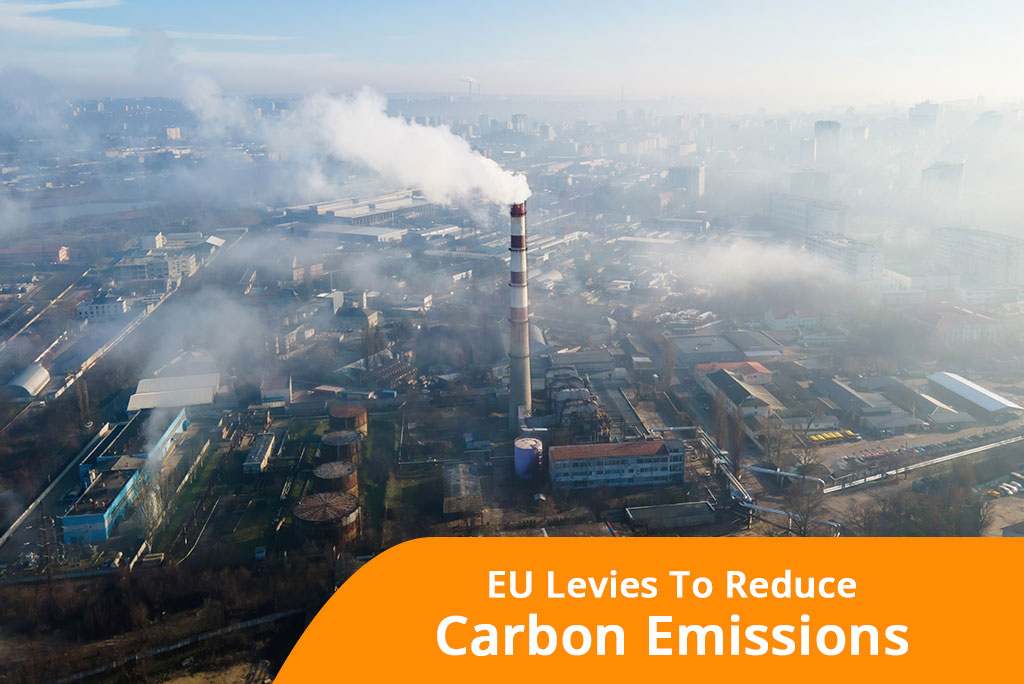
EU levies to reduce emissions in order to meet the target of cutting carbon emissions. The European Union’s “Fit For 55” package consists of legislative proposals focusing on reducing carbon emissions by 2030. The new regulatory framework for reducing emissions in the EU has been proposed by its parliament. It suggests that changes are required in the Emissions Trading System (ETS) and new levies on the EU’s imports under the Carbon Border Adjustment Mechanism (CBAM). New EU Levies On Sectors The proposal under the “Fit For 55” package and the CBAM, the EU’s parliamentary authorities will initially apply the changes and impose a ‘carbon price’ on imports of high-carbon commodities imported from other countries, belonging to different industries. Read More:

Read More

Denmark's Clean Energy Rise As Fossil Fuel Dependence Reduce

Denmark’s Clean Energy Rise As Fossil Fuel Dependence Reduce

Denmark’s clean energy transition is taking a fast pace as the country is lessening its dependence on fossil fuels. The Danish government’s efforts are majorly directed toward lessening the usage of fossil fuels to make a transition. Denmark is moving towards a clean energy transition from fossil fuels. One report suggests that wind and solar energy contributed to about half of the electricity generation in Denmark in 2020. Look at Denmark’s import statistics to learn more about the country’s current posture in the market. Denmark’s Fuel & Oil Imports Denmark is planning to expand its renewable energy reliance to cut off the reliance on the usage of fossil fuels. The top imported fuels & oil commodities in Denmark are crude

Read More

ESG After The Russia-Ukraine War

The Landscape of ESG Investment After The Russia-Ukraine War

The Russia-Ukraine war has started to bring changes in the ESG investment process and supply chain of commodities. The investment processes in concern with ESG factors and requirements seem to take turns. This has resulted in a probable dismantling of the Russian economy, with factors aligning mainly against Russia. While this brings speculations over the humanitarian causes, the change in the ESG investment is keen to bring sustainable choices. ESG Investment of Governance The geopolitical tensions that the Russian invasion of Ukraine has brought up are not unknown to the countries. The government of different countries has started to cut ties with the Russian government. The banning of Russian banks from SWIFT is a strong example of this. Read More:

Read More

Global Solar Cells Import-Export Trends

Solar Cells Trade Trend Growing In The Countries Positively

Solar panels or photovoltaic cells are increasingly finding their way into the mainstream energy generation methodologies. Solar cell trade between countries is increasingly growing and countries such as the US, China, and India are making headlong progress, inviting headlines. Imports and exports of solar cells increased in 2022 in a few countries compared to 2020. From the COVID-19 and Russia-Ukraine war, alternative energy adoption grew and is still growing. There are several factors that have played the most significant role in the development of energy generation in several countries around the world. Countries are now leaning toward alternative energy sources than the traditional sources of energy such as fossil fuels. The Pandemic Stricken World During COVID-19 COVID-19 is one of

Read More

Four EU Countries Jointly Set an Offshore Wind Target of 65 GW by 2030

Four EU Countries Jointly Set an Offshore Wind Target of 65 GW by 2030

Four European Union (EU) countries – Belgium, Denmark, Germany, and the Netherlands jointly set an offshore wind target of at least 65 gigawatts (GW) by 2030. That figure is intended to get more than double to 150 GW by 2050. According to the Global Wind Energy Council, these four countries were having 35.3 GW of global offshore wind capacity as of September 2021. Big Offshore Wind Push in Europe The big offshore wind push by Belgium, Denmark, Germany, and the Netherlands jointly will deliver at least half the capacity needed for the European Union to reach net-zero by 2050. The EU has set an overall target of generating 300 GW of offshore wind by 2050, which is up from the

Read More

Italy Importing Gas From Qatar, But It Might Need To Do More

Italy Importing Gas From Qatar, But It Might Need To Do More

In the aftermath of the Russia-Ukraine war, the imports-reliant European country, Italy, will import gas from Qatar, which sounds like a ‘short-term solution’ to analysts. Russia’s gas imports account for nearly 40% of Italy’s total imports, as per global trade statistics 2021. However, the decision taken by Italy is deemed to be a temporary relief to the European country and not really pulling it out of the situation completely. The imports in Italy are the main source of its energy generation. A more long-term solution lies in energy generation through alternative methods and measures. Italy – A Heavily-Reliant Importing Country Italy is one of the European countries which relies heavily on the imports of energy commodities such as fossil fuels.

Read More

UK To Cut Off The Trade From Canada For Hormone-Treated Beef

UK To Cut Off The Trade From Canada For Hormone-Treated Beef

In the early trade negotiations to be conducted between both the regions, the UK is stringent on maintaining its food safety and animal welfare standards. The UK imports about 35% of beef and veal combined annually. Out of approximately 1.5 million tonnes of beef each year, Canada exports around 45% of its produced beef and cattle production. Canada has urged the UK to lift the hormone-treated beef imports ban. UK’s department for international trade said in a statement recently that Canada cultivates a highly hormone-induced beef. As per the UK’s high food safety standards and animal welfare, trade negotiations with other countries must comply with the UK’s import regulations. Is UK A Beef Importer or an Exporter? According to the

Read More

Ukraine Clean Energy Market Amid Russia-Ukraine War

How Ukraine Clean Energy Market Is Valuable To Russia and the EU?

Russia-Ukraine war is causing troubles across nations as many commodities prices have peaked high, while shipment delays from both Russia and Ukraine are also causing bottlenecks in the supply chain. There are commodities that countries import from both Russia and Ukraine, such as wheat, for which both countries account for 29% of global exports. On the other hand, for the exports of corn, both countries account for around 19% of the global exports. The shortage of commodities is evident in many countries, especially the EU, which accounts for 30-40% of Russian crude oil exports. A big proportion of the market in the EU imports Russian oil to fuel its factories and power plants, fulfilling the energy demand in the region.

Read More

The Latest and Greatest News

Want Global Trade Insights?
Sign Up to Our Newsletter!