
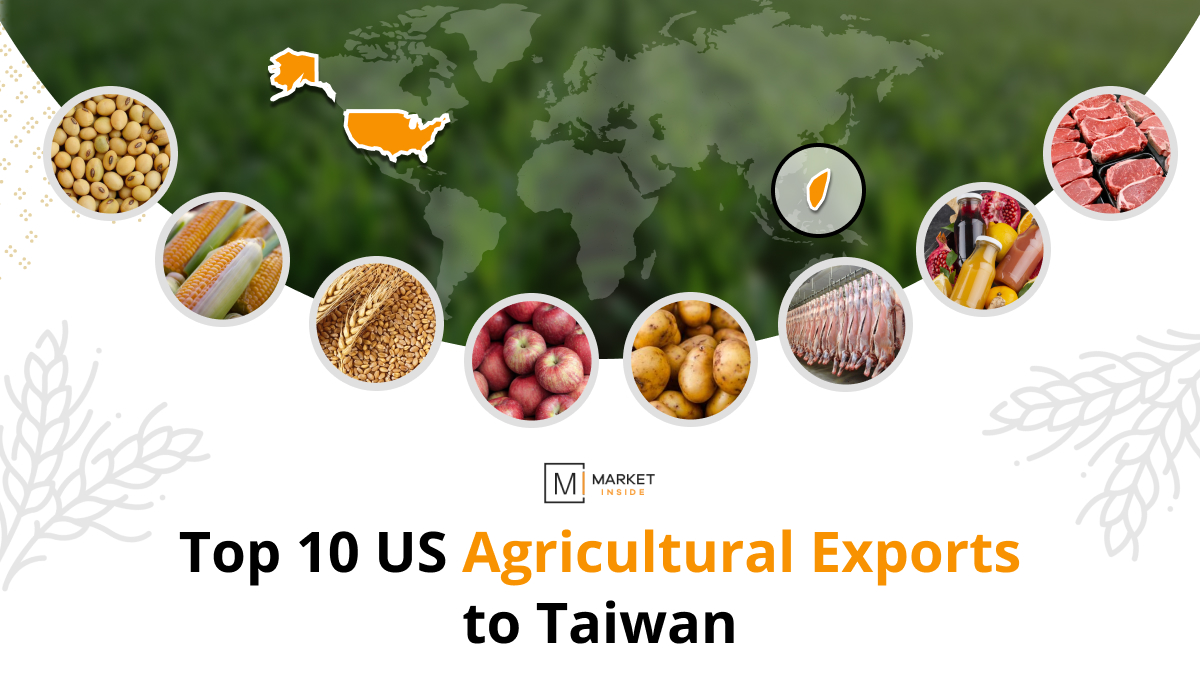
The bilateral trade relationship between the United States and Taiwan is characterised by a robust and dynamic connection founded on shared democratic values and mutual economic interests. In the South China Sea, Taiwan is a strong and reliable trade partner, ranking among the top U.S. trading partners globally. Further, Taiwan is critical in global supply chains and contributes significantly to the U.S economy. The economic ties deepen as Taiwan’s geographical limitation necessitates significant food imports, and the U.S. plays a critical role, making Taiwan the top market for U.S. agricultural products. This dependency is clear in key commodities like beer, soybeans, corn, etc., ensuring food stability and economic well-being. United States Agriculture Export to Taiwan According to Taiwan’s trade data,
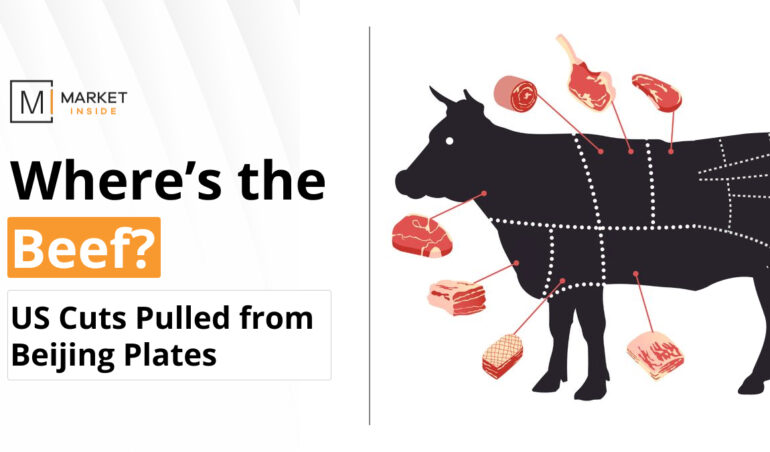
As the U.S.-China trade war simmers into its latest chapter, the fallout is now being felt on dinner plates across Beijing. American-style restaurants in the Chinese capital quietly remove U.S. beef from their menus, citing rising tariffs, supply disruptions, and growing uncertainty in the import market. Once a staple of upscale dining and Western-themed eateries, U.S. beef is becoming harder to find, both for chefs and the customers who crave it. How much beef does the US export to China and other countries? Will Australia fulfil China’s demand for beef? Everything is explained with crucial US beef export data in this article. The US-China trade war means American beef, once the star ingredient, will soon be off the table. American
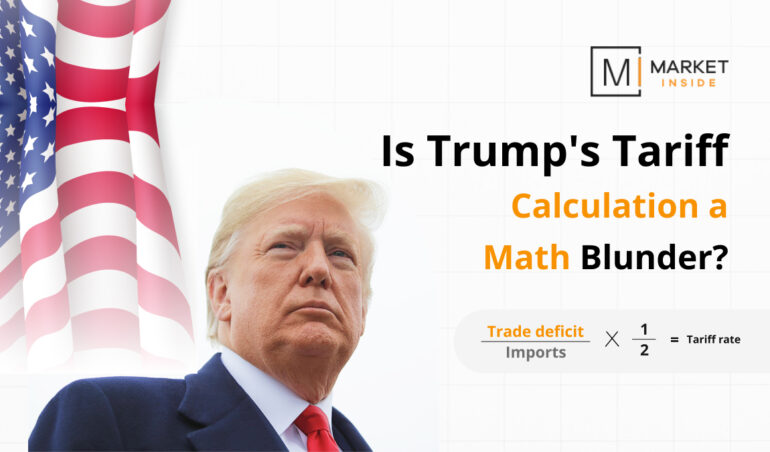
Over the years, tariffs, used to protect domestic industries and regulate unfair trade practices, have taken on a new dimension in this modern trade arena. Tariffs are often calculated based on factors like production costs, market competition, and the need to level the playing field. Countries use this approach to balance national interests with the broader dynamics of international commerce. However, under the Trump administration, the tariff approach has changed. It circled the bilateral trade deficit, considering the volume of trade imbalances rather than traditional economic metrics. This leads to increased costs for businesses and consumers, with potential long-term consequences for economic growth and stability. What is the rationale behind Trump’s tariffs? President Donald Trump has consistently linked the rising
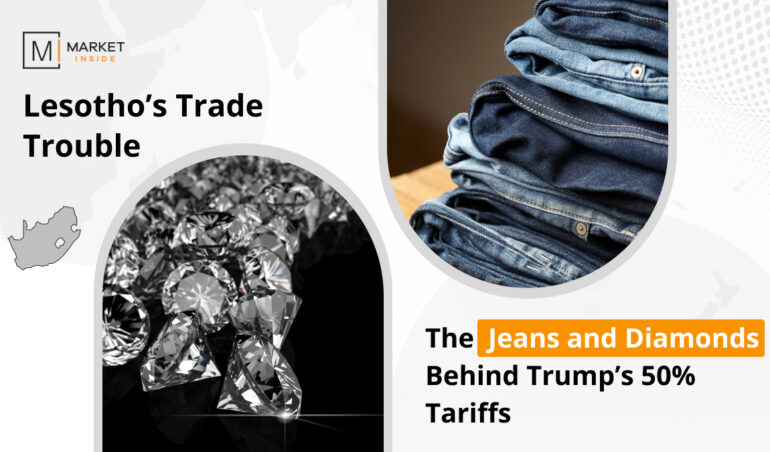
Lesotho, a small landlocked nation in southern Africa, has recently found itself at the center of a significant trade dispute with the United States, primarily due to its exports of textiles—especially jeans—and diamonds. In April 2025, President Donald Trump imposed a 50% tariff on imports from Lesotho, the highest rate applied to any country. How US tariff will impact Lesotho’s apparel and metal industry, particularly jeans and diamonds? A market scenario is explained here with Lesotho export data and US import data. 50% US tariff on Lesotho – what is means Lesotho was slapped with the Trump’s highest tariff rate of 50% on goods exported by the country to the United States. America has a big trade deficit with Lesotho,
On Feb 10, 2025, President Trump made significant changes to US steel and aluminum tariffs under Section 238 of the Trade Expansion Act of 1962, citing the need to protect the interest of domestic industry and safeguard national interest. To achieve this, the Trump administration announced that it has increased tariffs on aluminum imports from 10% to 25% and maintained 25% tariffs on steel. Further, the government dismantled existing exemptions and broadened the scope of tariffs. This signals a shift toward a more protectionist trade policy and ignites a trade war. Key Highlights: Trump made significant changes to US steel and aluminum tariffs under Section 238 of the Trade Expansion Act of 1962 US iron and steel imports from the
The potential imposition of significant U.S. tariffs starting April 2, 2025, indicates economic uncertainty, leading to a substantial rise in the price of goods for consumers and businesses. This significantly impacts domestic manufacturers and international companies facing disrupted supply chains and increased import costs. To cushion the domestic market against the tariff war, the US Federal Reserve has maintained higher interest rates. However, this dampens economic activity and raises potential fears of a global slowdown, fracturing international commerce and fueling trade wars across regions. This raises concerns for businesses, investors, and policymakers worldwide. How Trump’s Tariffs Are Sparking Chances of US Recession The fear of the US recession is continuously growing, and several factors are responsible for this, which are
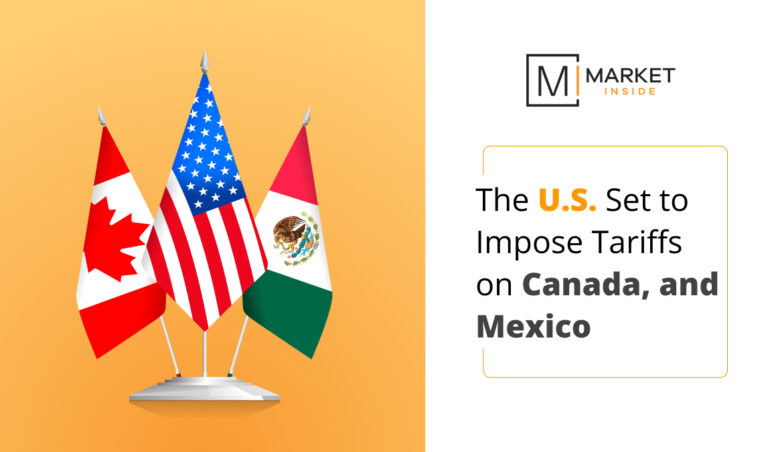
President Donald Trump is keen to impose tariffs on all imports from Canada and Mexico as soon as 1st Feb 2025. Since taking office on 20th Jan 2025, Trump has said in various public meetings that he would be considering a 25% tariff on Canada and Mexico. Products on which tariffs would be imposed include – computer chips, semiconductors and pharmaceuticals. The US administration has also planned to impose 10% tax on all imports from China, but it may not do so to avoid a trade war with Beijing. The United States has the legal authority to impose tariffs on imports from any country by a variety of executive actions and with very short notice. The country demonstrated over the
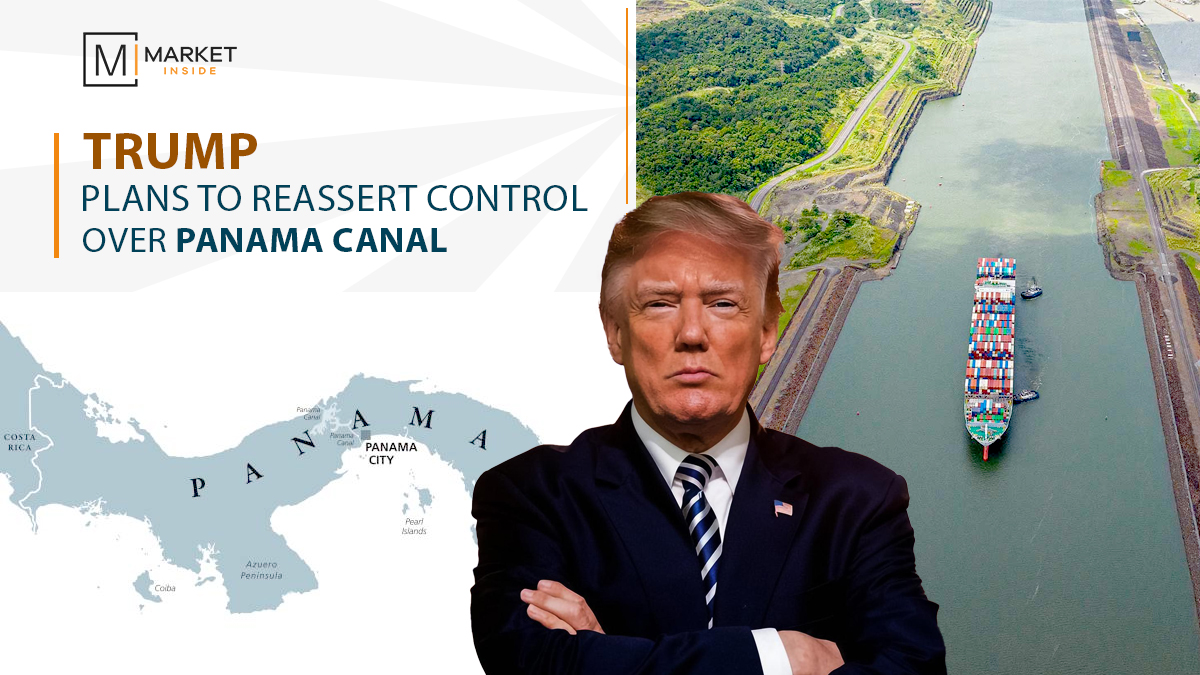
The world is dictated by a powerful nation- the United States. The newly elected President- Donald J. Trump has been steering the world of economics with his headstrong ideologies, transformative reforms, and suggestions. Recently, Mr. Trump has used a series of threats to regain control of Canal de Panamá. He has expressed several disagreements on the activities circulating in the Panama Canal. Let’s discover the Panama Canal’s significance, striking allegations made by Trump about what will happen if Trump takes over the Panama Canal, and how it can affect the economy. Trump’s Plan to Control Panama Canal Donald Trump is in talks to reassert the Control over the Panama Canal. Trump accuses Panama of overcharging Central American waterways. Trump adamantly
November has been a ride for economic affairs ever since Donald Trump has been reinstated as the president of the USA. Ever since he came into power, he has been in the news for various reasons, from imposing tariffs to the Green New Scam or the immigration laws. Trump is buzzing in the news feed every week. For the trade hawkers, there’s a strained environment. Under his aegis, the country has begun imposing tariffs on all the foreign goods coming to the USA. There are tariffs, and special trade policies made in the best interest of the USA. To ensure their national security interests. The US tariffs on China and neighboring countries are not an act of randomness; there are